Common Harmonica Questions: A Beginner's Guide
Common Harmonica Questions: A Beginner's Guide
Welcome to the enchanting world of harmonica playing! Whether you're just starting out or looking to brush up on the basics, this guide is here to answer some of the most common questions beginners often have. So grab your harmonica and let's dive into the music!
1. Which Harmonica Should I Start With?
Choosing your first harmonica can be a bit overwhelming with so many options available. Here's a quick rundown to help you make an informed choice:
- Diatonic Harmonica: This is the most common type for beginners. It's typically used in Blues and Folk music. A 10-hole diatonic harmonica in the key of C is recommended for starting out because many beginner lessons and songs are in this key.
- Chromatic Harmonica: If you're interested in exploring a wider range of notes and genres like jazz or classical, a chromatic harmonica might be your pick. However, it's a bit more complex and might not be ideal for absolute beginners.
- Tremolo and Octave Harmonicas: These types have a unique sound but are less common for beginners.
2. How Do I Hold a Harmonica?
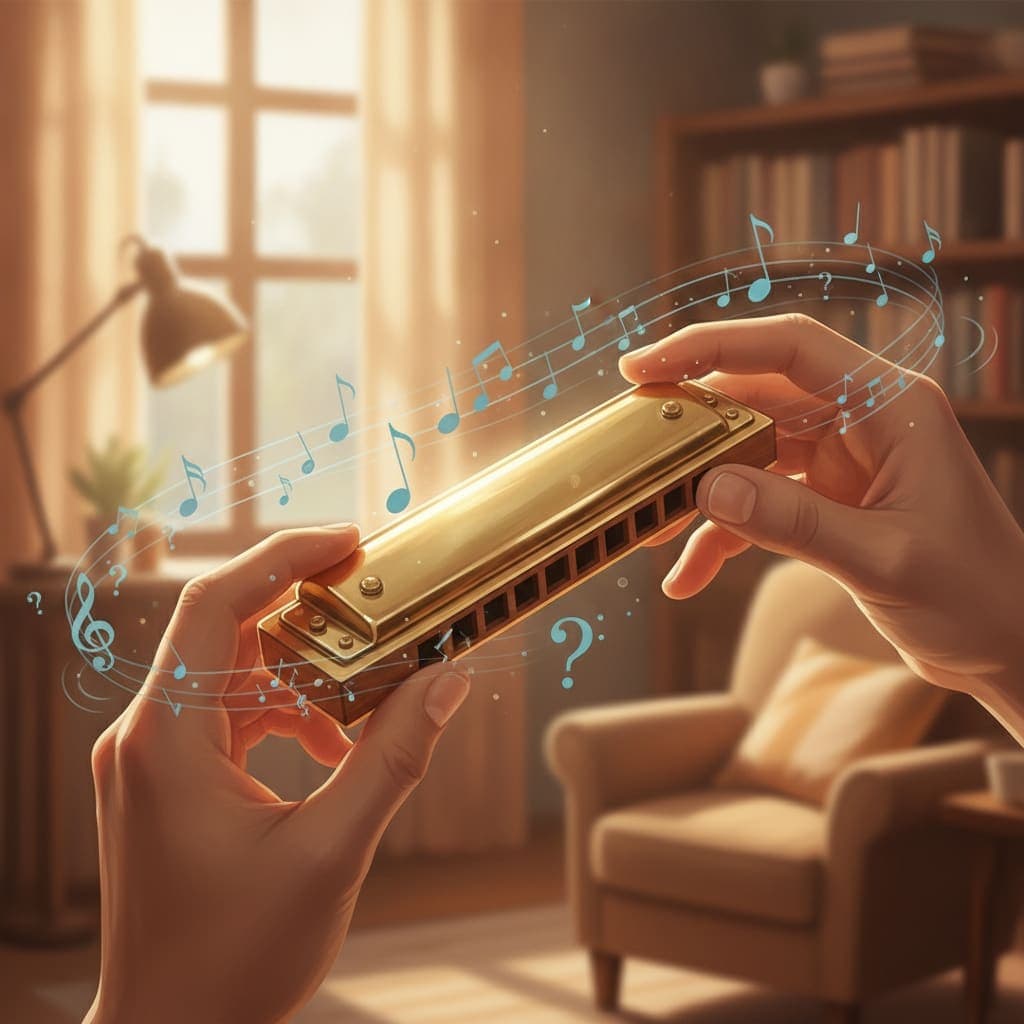
Holding the harmonica correctly is crucial for playing it comfortably and efficiently. Here’s how you can do it:
- Hold the harmonica in your left hand between your thumb and index finger. The numbers should be facing you, with the lower notes on the left.
- Use your right hand to cup around the harmonica, creating a resonating chamber that can help with sound modulation.
- Keep your grip firm but relaxed to allow for easy movement.
3. How Do I Play Single Notes?
Playing single notes cleanly is a key skill in harmonica playing. Here are two techniques to get you started:
- Lip Blocking: This is the most common method for beginners. To play a single note, cover the holes on either side of the note you want to play with your lips, creating a seal.
- Tongue Blocking: Here, your tongue blocks the adjacent holes while you play the desired note. This technique can be more challenging but adds versatility to your playing.
Practice these techniques with simple songs like Piano Man by Billy Joel to develop your skills.
4. How Do I Read Harmonica Tabs?
Harmonica tabs are a simplified way to read music that shows which holes to blow or draw. Here’s a quick breakdown:
- Numbers represent the hole number.
- A number without a symbol means blow, while a number with a minus sign (-) means draw.
For example, the tab "4 -4 5" means blow into hole 4, draw on hole 4, and then blow into hole 5.
5. What Are Some Easy Songs to Start With?
Starting with easy songs helps build confidence and skill. Here are a few beginner-friendly tunes:
- "Stairway to Heaven" by Led Zeppelin is a great choice for Rock enthusiasts.
- For a more gentle tune, try "How Deep Is Your Love" by the Bee Gees.
- "Your Cheatin' Heart" offers a classic country vibe for those interested in exploring different genres.
6. How Often Should I Practice?
Consistency is key in learning any instrument. As a beginner, aim for:
- Daily practice: Even 10-15 minutes a day can make a big difference.
- Focused sessions: Concentrate on specific techniques or songs during each session.
Over time, you can gradually increase your practice duration as you become more comfortable.
Conclusion
Embarking on your harmonica journey can be incredibly rewarding. Remember, every musician started as a beginner. With patience and practice, you'll soon be playing your favorite tunes and even improvising your own melodies. Keep exploring, stay curious, and most importantly, enjoy the process!
Feel free to explore more songs like "Houston" and keep an eye out for new tutorials to expand your repertoire. Happy playing!
Share this article
Ready to Start Playing?
Browse our collection of harmonica tabs and start learning your favorite songs today.
Explore Songs