
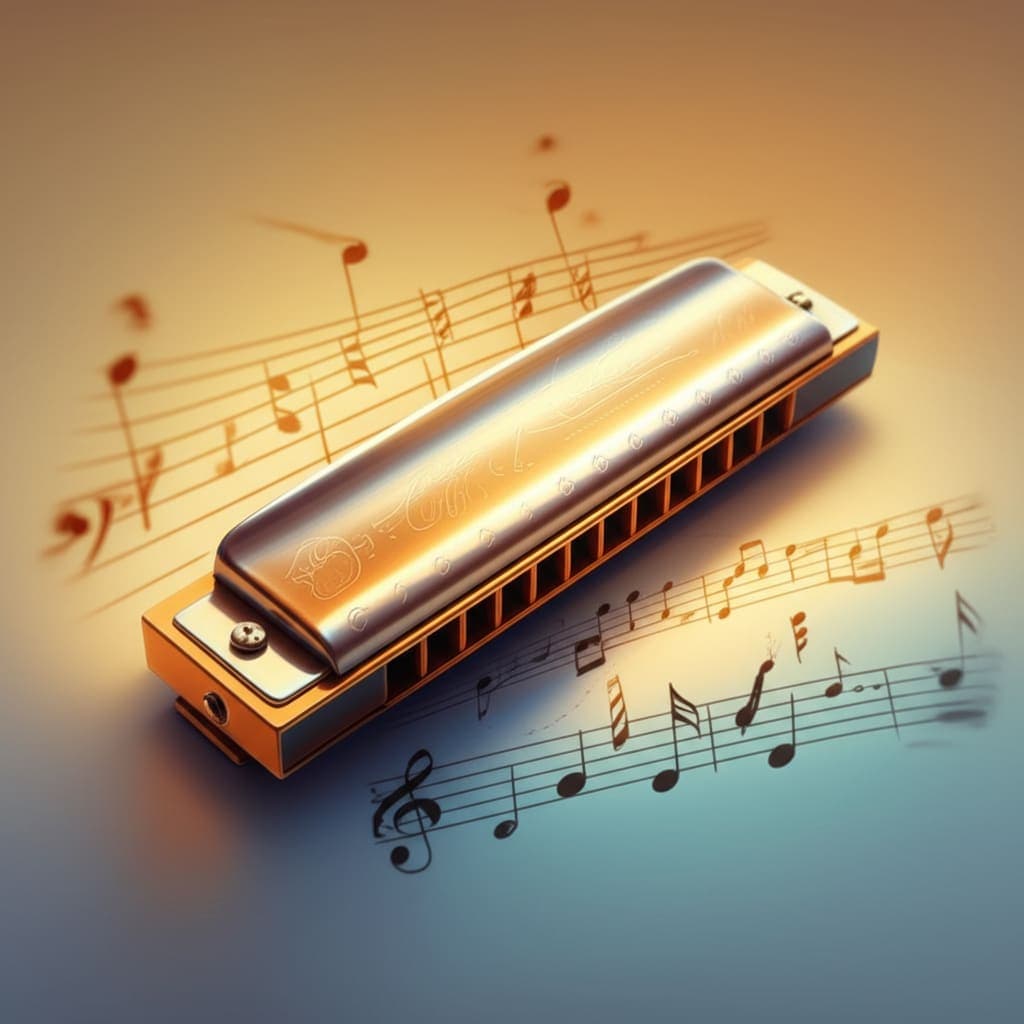
Your First Week with a Harmonica: A Complete Beginner's Roadmap
Your First Week with a Harmonica: A Complete Beginner's Roadmap
So you've picked up a harmonica—congratulations! You're about to embark on a musical journey that's been transforming lives for over 200 years. The diatonic harmonica (also known as a blues harp) is one of the most accessible instruments in the world, yet capable of profound musical expression.
Day 1-2: Getting Comfortable with Your Instrument
Understanding Your Harmonica
Most beginners start with a 10-hole diatonic harmonica in the key of C. This is the standard recommendation because:
- The key of C works with most beginner songs
- It sits comfortably in the middle register
- Countless tutorials are designed for C harmonicas
Hold your harmonica with the low notes on the left (holes 1-3) and high notes on the right (holes 8-10). The numbers stamped on top correspond to each hole.
Your First Breath
The harmonica produces sound on both the blow (exhale) and draw (inhale). This is what makes it unique among wind instruments. Try this:
- Bring the harmonica to your lips
- Take a gentle breath OUT through holes 4, 5, and 6
- Now breathe IN through the same holes
- Notice how different notes emerge
Key Tip: Don't force the air. The harmonica responds to gentle, controlled breathing—not brute force. Think of it as breathing through the harmonica, not at it.
Day 3-4: Single Notes and Basic Scales
Getting Clean Single Notes
This is where many beginners struggle, but there are two reliable techniques:
Lip Pursing (Puckering) Purse your lips like you're whistling or drinking through a straw. This naturally isolates a single hole.
Tongue Blocking Place the tip of your tongue on the left side of your mouth opening, leaving only the right side free for one hole. This technique is used by professionals for its fuller sound.
The Middle Register
Holes 4-7 are your sweet spot as a beginner. Practice playing:
- 4 blow, 4 draw
- 5 blow, 5 draw
- 6 blow, 6 draw
- 7 blow, 7 draw
These notes form the foundation of countless songs.
Day 5-6: Your First Songs
Here's the exciting part—you're ready for real music! The Folk genre offers perfect beginner territory.
Mary Had a Little Lamb
Using only holes 4, 5, and 6:
5B 4D 4B 4D 5B 5B 5B
4D 4D 4D 5B 6B 6B
5B 4D 4B 4D 5B 5B 5B
5B 4D 4D 5B 4D 4B
(B = Blow, D = Draw)
Moving to Real Songs
Once comfortable, try Amazing Grace—a timeless piece that uses mostly blow notes in the middle register. It's one of the most rewarding early achievements.
Day 7: Building Your Practice Routine
The 15-Minute Daily Practice
Consistency beats marathon sessions. Structure your practice:
- Warm-up (3 min): Long tones on holes 4-7
- Technique (5 min): Clean single note exercises
- Song Practice (5 min): Work on your current piece
- Cool-down (2 min): Free play and experimentation
Common Beginner Mistakes to Avoid
- Playing too hard: The harmonica loves a gentle touch
- Skipping the basics: Clean single notes matter more than speed
- Ignoring rhythm: Use a metronome or tap your foot
- Not listening: Study how Bob Dylan and other masters phrase their notes
What's Next?
After your first week, you're ready to explore:
- Bending notes: The technique that defines Blues harmonica
- More songs: Build your repertoire gradually
- Different keys: Once C feels natural, explore other harmonica keys
The journey ahead is rich with possibilities. Some players fall in love with the raw emotion of Blues, while others are drawn to the storytelling tradition of Folk music. There's no wrong path—only the music that moves you.
Remember: every master harmonica player started exactly where you are now. The only difference is they kept going.
Ready to learn your first complete song? Check out our tab for Amazing Grace—it's perfect for week two!
Share this article
Related Content
Songs
Genres
Ready to Start Playing?
Browse our collection of harmonica tabs and start learning your favorite songs today.
Explore Songs