
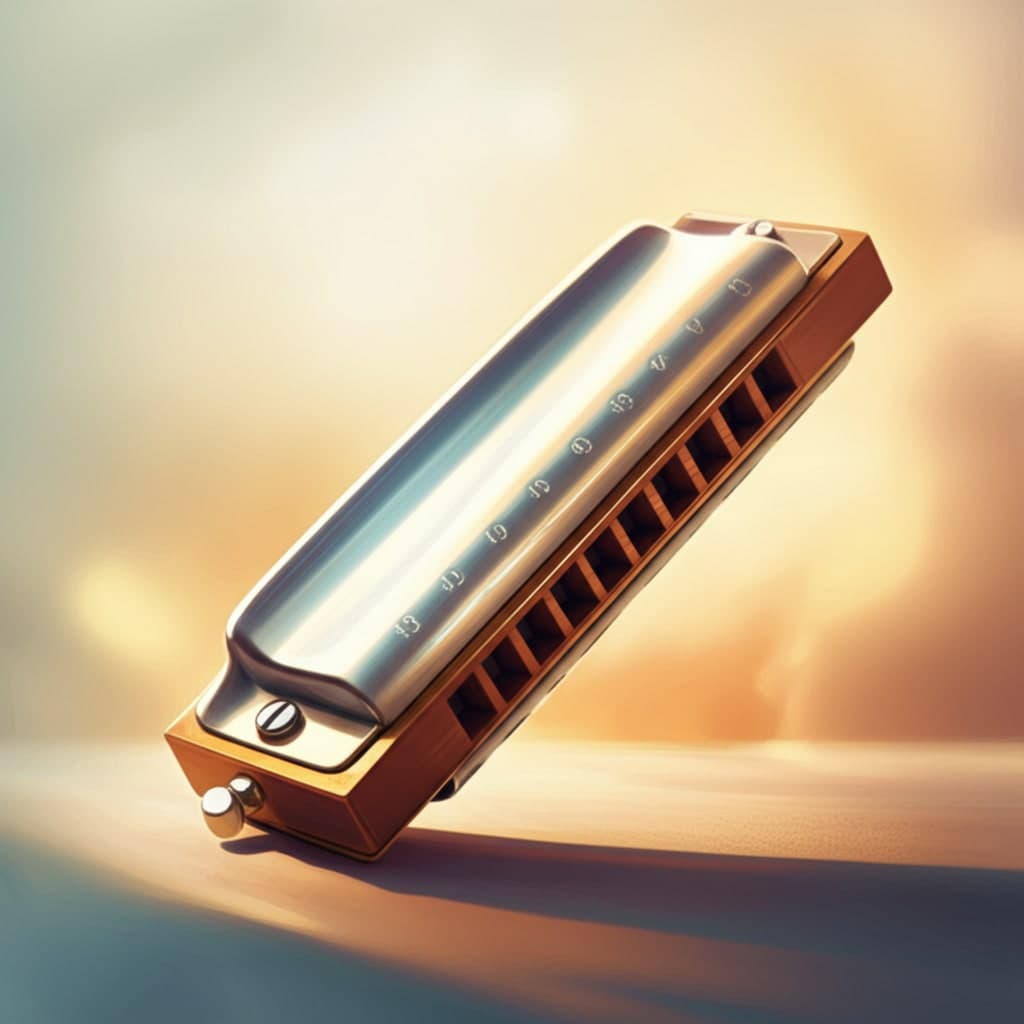
Harmonica Keys Explained: Which Harmonica for Which Song?
Harmonica Keys Explained: Which Harmonica for Which Song?
You've got a song you want to play. It's in the key of A. Which harmonica do you grab? Is it the A harmonica? A D harmonica? Something else entirely?
This is the moment where many harmonica players get stuck. Let's fix that permanently.
The Core Concept: Positions
Unlike a piano (where a C major scale uses the same keys regardless of the song's key), harmonica players choose different harmonicas based on what relationship they want between the harmonica key and the song key.
These relationships are called positions.
First Position (Straight Harp)
The simple version: Use a harmonica that matches the song key. Song in C → Use a C harmonica
In first position, the blow notes naturally emphasize the home chord of the song. It sounds bright, major, and is ideal for:
Try playing Amazing Grace or Take Me Home Country Roads in first position—the songs practically play themselves.
Technical note: You're centered around holes 4-7, primarily using blow notes for the melody.
Second Position (Cross Harp)
The simple version: Use a harmonica a fourth below the song key. Song in G → Use a C harmonica Song in A → Use a D harmonica
Second position is where Blues lives. The draw notes emphasize the song's home chord, which allows:
- Natural bending of the most important notes
- The "bluesy" tension/release cycle
- Easier access to blue notes
This is the position used for most blues harmonica, rock harmonica, and soulful playing.
The quick chart for common keys: | Song Key | Harmonica to Use | |----------|------------------| | A | D | | C | F | | D | G | | E | A | | G | C |
Technical note: You're centered around holes 1-6, primarily using draw notes, with bends available for expression.
Third Position (Slant Harp)
The simple version: Use a harmonica a full step below the song key. Song in D minor → Use a C harmonica
Third position produces a natural minor sound. It's used for:
- Minor blues
- Darker folk songs
- Jazz explorations
It's more advanced, so park it for now if you're newer to harmonica.
The Circle of Fifths Shortcut
Once you understand positions, the circle of fifths becomes your friend:
- Move one step clockwise from the song key: that's your second position harmonica
- Move two steps clockwise: that's your third position harmonica
C → G → D → A → E → B → F# → C# → Ab → Eb → Bb → F → C
If a song is in E, move one step clockwise and you land on A. Use an A harmonica for second position.
Practical Examples
Sweet Home Alabama (Key of D)
First position (D harmonica): Bright, country sound. Good for playing the melody straight.
Second position (G harmonica): Darker, bluesier. Better for improvising over the guitar riffs.
Most Rock songs like Sweet Home Alabama work in either position—your choice depends on the sound you want.
Blues in A
Second position (D harmonica): The standard choice. All the classic licks are in D harp over A blues.
First position (A harmonica): Possible but sounds more "major key" and less authentically bluesy.
Folk Song in G
First position (G harmonica): Straightforward, easy to follow the melody. Great for Blowing In The Wind or similar.
Second position (C harmonica): Works if you want a grittier edge to the folk sound.
When Position Choice Really Matters
Jamming with Others
Someone says "blues in E"—you need to know instantly that you're grabbing your A harmonica. Second position, second nature.
Playing by Ear
When learning songs by ear, understanding positions helps you find the right harp faster than trial and error.
Communicating with Musicians
"I'm playing cross harp in C" tells guitarists exactly what chord they'll hear you land on.
Building Your Harmonica Collection
Based on position understanding, here's the strategic order for building a harmonica kit:
- C (covers G in 2nd position—tons of songs)
- A (covers E in 2nd position—blues standard)
- D (covers A in 2nd position—also common)
- G (covers D in 2nd position, C in 1st)
- Bb or F (fills gaps for horn-friendly keys)
This five-harmonica set handles the vast majority of jam situations.
Common Confusions Clarified
"Why don't the notes on my harmonica match the song's melody?" You might be in the wrong position. A C harmonica playing a C song in second position will feel off—switch to first position.
"The blues licks I learned don't work on this song." You probably learned them in second position but are playing a song that wants first position, or vice versa.
"Why do pro players switch harmonicas mid-song?" Some songs modulate (change key). Pros carry a full set and swap harps as needed. For now, stick with one key per song.
Practice Exercise
Take one song you know well. Play it in first position with the matching harmonica. Then try the same song in second position with the harmonica a fourth below.
Notice how different they feel? That's the power of positions. The same melody takes on completely different characters.
Master this concept, and you'll never be confused about harmonica keys again.
Ready to apply this knowledge? Try Take Me Home Country Roads in first position (G harp) or Sweet Home Alabama in second position (G harp over D).
Share this article
Related Content
Ready to Start Playing?
Browse our collection of harmonica tabs and start learning your favorite songs today.
Explore Songs